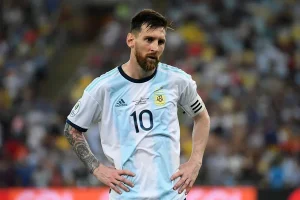
I’ll be honest — I used to think Messi was just one of those “born lucky” athletes. Tiny kid, natural talent, discovered young, rest is history. That’s the version you get if you only skim highlight reels.
Then I actually dug into his early years for a piece I was writing, and I had to stop and rewatch a few old clips. The real story is messier, scarier, and honestly a lot more interesting than the highlight-reel version. This is a kid who almost didn’t make it as a footballer at all — not because he lacked talent, but because his own body was working against him and nobody in Argentina wanted to pay the bill to fix it.
So if you’ve ever wondered how Lionel Messi actually got his start — not the Instagram caption version, the real one — here’s what actually happened.
The Backyard Beginnings in Rosario
Messi was born on June 24, 1987, in Rosario, Argentina, a working-class city a few hours outside Buenos Aires. Football wasn’t a hobby in that house, it was basically the family religion. His dad coached, his brothers played, and Leo was kicking a ball around before he could really talk in full sentences.
At five years old, he tried to join a local club called Grandoli. The coach looked at him and said no — too small. This is where the story gets a detail I genuinely didn’t expect: it was his grandmother, Celia, who walked over and basically talked the coach into putting him on the pitch anyway. She showed up to every training session and every match after that.
If you’ve ever seen Messi point up to the sky after scoring a goal, that’s who he’s pointing at. She passed away when he was ten, and he’s kept that little tribute going his whole career.
Newell’s Old Boys and the Goal-Scoring Machine
Around age six, Messi joined the youth setup at Newell’s Old Boys, one of Rosario’s big clubs. This is where things start sounding less like a normal childhood and more like a scouting report.
Opposition coaches would actually complain before matches, insisting this kid couldn’t be the age listed on his registration papers because he was scoring at a rate that didn’t make sense for someone that size. By the time he left Argentina, he’d reportedly scored close to 500 goals across various youth teams. That’s not a typo — youth football, sure, but that number is absurd.
Here’s the part people forget though: he was small. Really small. And that wasn’t just genetics being unkind — it turned into a genuine medical problem.
The Diagnosis That Almost Ended Everything
Around age ten or eleven, after over a year of tests, doctors diagnosed Messi with a growth hormone deficiency. His doctor predicted that without treatment, he’d max out at roughly 4 feet 7 inches tall. He’d stopped growing since he was around nine.
The treatment existed. It just wasn’t cheap. Estimates put the cost somewhere between 900 and 1,500 US dollars a month, which for a family where his dad worked in a steel factory and his mom cleaned houses part-time, was simply not realistic long term.
This is the part of the story that actually gets me. Both Newell’s Old Boys and River Plate — two massive, storied Argentine clubs — had scouted him, knew he was special, and still passed on covering his medical treatment. Not because they doubted the talent. Because they weren’t willing to gamble that kind of money on a kid whose body might not cooperate.
Think about that for a second. The two biggest football institutions in his own country looked at a generational talent and said “too risky.” That’s how close this whole thing came to never happening.
The Move to Barcelona (and the Napkin That Changed Football)
The Messi family had relatives in Catalonia, so when things looked bleak in Argentina, they took a gamble and arranged a trial with FC Barcelona in 2000. Leo was 13.
Carles Rexach, Barcelona’s sporting director at the time, reportedly only needed a few minutes watching him play to know they had to sign him. The problem was bureaucracy — contracts, paperwork, board approval, all the boring stuff that takes weeks. Rexach didn’t want to risk losing him to another club in the meantime.
So, according to the accounts from people actually in the room that day, he grabbed a paper napkin and wrote out an informal agreement committing Barcelona to sign Messi and pay for his growth hormone treatment. That napkin later sold at auction for close to a million dollars. There’s some disagreement in different retellings about the exact date this happened — some sources point to February 2000, others to December 2000 — but the substance of the story holds across every account: an actual napkin, an actual promise, and it actually held up.
That single decision solved the medical crisis that two Argentine giants wouldn’t touch.
Life at La Masia Wasn’t Easy Either
Here’s another part that gets glossed over. Moving to Barcelona didn’t mean instant glory. His parents eventually went back to Argentina while Leo stayed to train at La Masia, Barcelona’s youth academy. He was 13, didn’t speak Catalan, and by several accounts barely spoke at all in the dressing room — teammates genuinely thought he might be mute for a while.
He’s talked about crying himself to sleep during that period. A kid the coaches were calling the most gifted player they’d ever seen was sitting quietly in the corner of the room, homesick and lonely.
I think this is the part worth sitting with if you’re following his story for inspiration rather than trivia. The talent was never really the hard part. The hard part was surviving the years where nobody was covering his medical bills and the years right after where he was completely alone in a new country as a young teenager.
From Trainee to First Team
Messi worked his way up through Barcelona’s youth ranks over the next few years, and by 16 he was training and playing friendlies with the senior squad. His official first-team debut came shortly after, and within a couple of years he was a regular fixture, eventually becoming the player most of us recognize today.
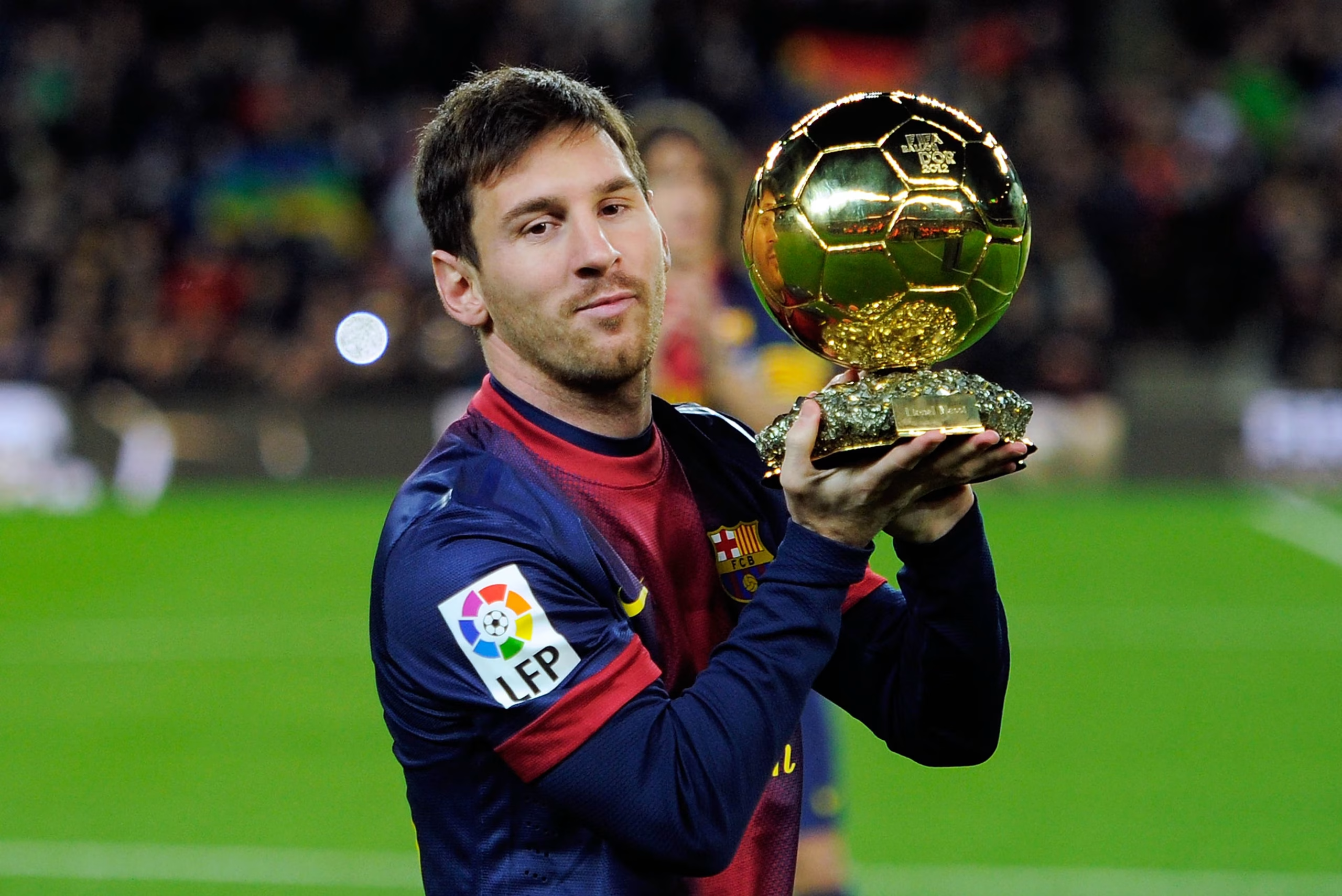
The rest — the Ballons d’Or, the records, the World Cup win with Argentina — gets covered everywhere, so I won’t rehash it here. What I wanted to actually lay out is the part before all that, because it’s the part that explains why he plays with the chip on his shoulder that he does.
A Few Things Worth Taking From This
If there’s a practical lesson buried in here (and I think there is, even outside football), it’s this:
- Talent alone doesn’t guarantee anything. Two major clubs saw his ability firsthand and still walked away because of financial risk.
- Sometimes the person who believes in you isn’t a professional — it’s a grandmother arguing with a coach, or a family willing to fly across an ocean on a gamble.
- The “overnight success” story almost always has years of quiet, painful groundwork nobody filmed.
Common Misconception Worth Clearing Up
A lot of quick summaries online make it sound like Barcelona “discovered” Messi out of nowhere during one lucky trial. In reality, his family was already navigating a medical crisis for years before that trial ever happened, and the trial itself was closer to a last resort than a scouting coup. Worth keeping in mind next time you see the story reduced to a single sentence.
If you’re researching this for a school project, an article, or just because you fell down a YouTube rabbit hole like I did — I’d recommend looking at interviews where people who were actually in the room (like Rexach or the journalists who covered Barcelona at the time) tell it in their own words. The details vary slightly depending on the source, but the core of it never changes: a small kid from Rosario, a medical bill nobody wanted to pay, and a napkin that somehow held up.