I spent a Saturday binge-watching old episodes of Jay Leno’s Garage and walked away assuming he had the single most valuable car collection on the planet. He’s got 181 cars, after all. Surely that beats everyone.
Then I found out Ralph Lauren’s collection, which has way fewer cars, is worth roughly $350 million, nearly triple Leno’s estimated $50-100 million total. Fewer cars, way more money. That completely broke my assumption that a bigger garage automatically means a richer one.
Once I actually dug into this properly, it became clear that “biggest car collection” and “most valuable car collection” are two completely different rankings, and almost nobody separates them clearly when they write about this topic.
Quantity vs. Value: The Distinction That Changes Everything
If you’re ranking by sheer number of cars, Jay Leno is the name that shows up constantly, with 181 cars and 160 motorcycles housed in his 140,000 square foot Big Dog Garage near Burbank Airport. Floyd Mayweather sits around 100 cars. Jerry Seinfeld has over 80, almost all Porsches.
But if you’re ranking by total dollar value, Ralph Lauren jumps way ahead of all of them despite owning far fewer vehicles. His collection includes a Ferrari 250 GTO worth $70 million or more on its own, plus a 1938 Bugatti 57SC Atlantic, one of only two ever built, valued north of $40 million. Two cars in his garage alone are worth more than Mayweather’s entire hundred-car fleet.
That’s the core lesson here: rarity and provenance matter more than raw count once you’re talking about serious money.
The Collectors Worth Actually Knowing About
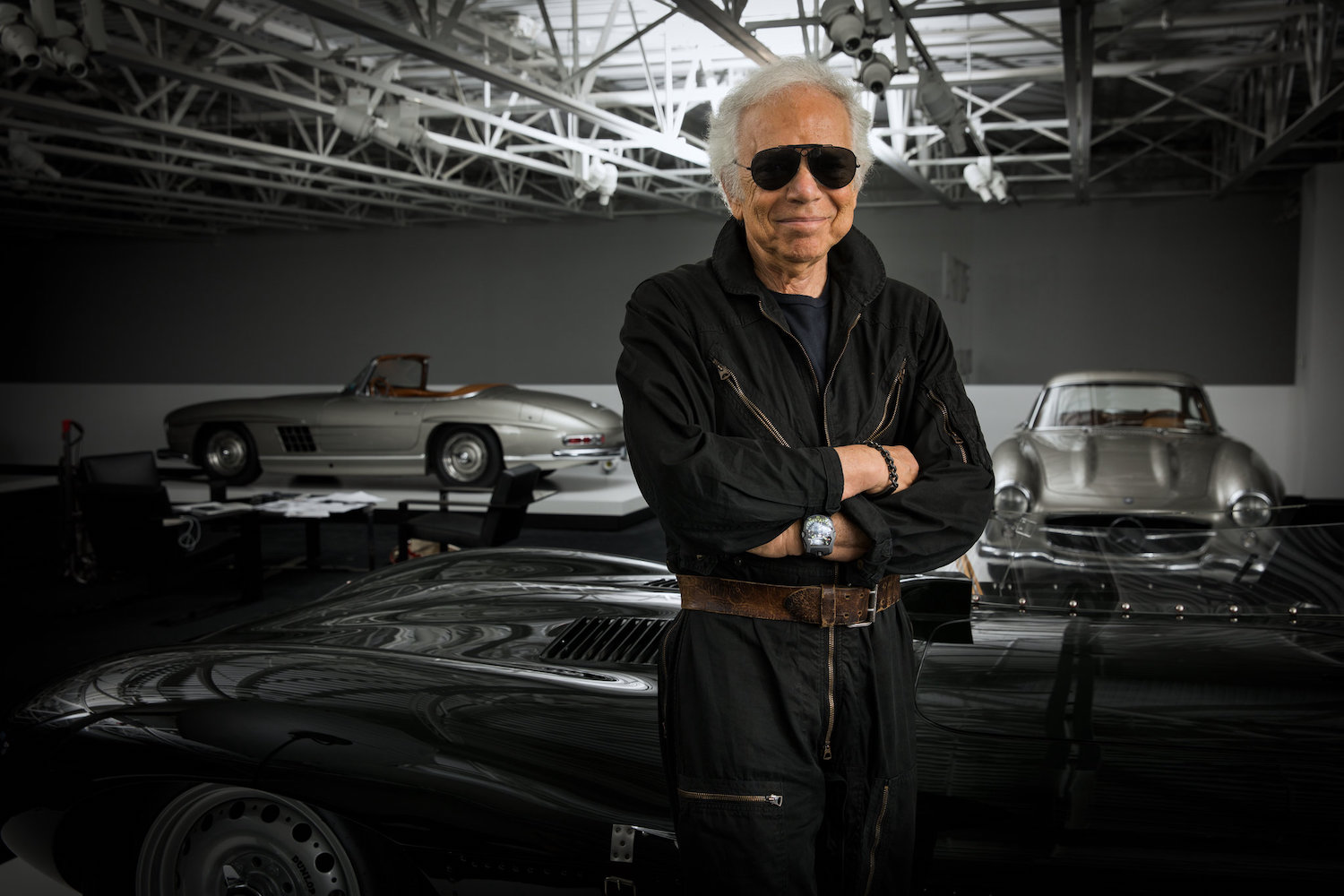
Ralph Lauren — around $350 million total, most valuable collection in the celebrity world. He treats his cars as museum pieces rather than daily drivers. The Bugatti Atlantic and the Ferrari 250 GTO alone account for well over $100 million of the total value, and the rest of his garage is filled with similarly museum-grade vehicles most collectors would never even get the chance to bid on.
Jay Leno — 181+ cars and 160 motorcycles, worth an estimated $50-100 million. What makes Leno different from almost everyone else on this list is that he collects for engineering, not investment. His garage includes steam cars, turbine cars, and vehicles that run on peanut oil. He’s been offered $17 million for his McLaren F1, which he bought for just $800,000, and turned it down because he actually drives it regularly. That’s a wild mindset once you realize most ultra-high-value collectors keep their rarest pieces locked away.
Jerry Seinfeld — 80+ cars, worth an estimated $50 million, almost entirely Porsches. He’s built one of the most significant private Porsche collections in the world, including rare models like the 959 and 918 Spyder. His garage has its own dedicated fleet management team and even an 850-square-foot living space with an elevator. He reportedly sold $22 million worth of cars in a single year, which shows this isn’t just a static collection sitting untouched, it’s actively curated and rotated.
Floyd Mayweather — around 100 cars, worth $30-40 million. His approach is different from Leno’s and Seinfeld’s entirely. He tends to buy multiple copies of the same hypercar rather than chase rare one-off pieces, and he owns half the world’s total supply of the Koenigsegg CCXR Trevita, since only two were ever made and he has both.
Beyoncé and Jay-Z — a collection that includes a $28 million Rolls-Royce Boat Tail, one of only three ever made, alongside a Pagani Zonda F and a Bugatti Veyron Grand Sport. Their combined net worth sits around $3.5-3.8 billion, so the car collection is a relatively small slice of their overall wealth, but the individual pieces are genuinely museum-grade.
Tom Brady — a collection built up gradually through both purchases and Super Bowl MVP winnings, including a Ferrari 458, an Aston Martin DB11, and a Bugatti Veyron Super Sport. His first luxury vehicle wasn’t even a purchase, it was his rookie-year Super Bowl MVP prize.
Rowan Atkinson — famously owned a McLaren F1 that he crashed twice. After the second crash cost around £1 million in repairs, he eventually sold the car for roughly £8 million. It’s a good reminder that even the most valuable cars in the world still get driven, and driven cars still crash.
Why Some Collectors Chase Volume and Others Chase Rarity
Once you look at enough of these collections side by side, two distinct philosophies show up.
The engineer-collectors, like Jay Leno, buy cars because of what’s mechanically interesting about them, not because of resale value. A steam-powered Stanley from 1906 sitting next to a modern McLaren P1 only makes sense if you’re chasing engineering history rather than investment returns.
The curator-collectors, like Ralph Lauren, treat their garage more like a private museum. Every acquisition is chosen for rarity, provenance, and long-term value appreciation, which is exactly why a much smaller collection can be worth so much more.
Neither approach is “better,” but they lead to wildly different numbers when someone tries to rank these collections, which is a big part of why online lists disagree so much on who’s actually “the biggest” or “the richest” collector.
Step-By-Step: How to Actually Check a Car Collection’s Real Value
Step 1: Separate car count from total dollar value immediately. If an article just says “X owns 100 cars” without a value attached, that tells you almost nothing about how much the collection is actually worth.
Step 2: Check auction results for comparable vehicles. Sites like Bring a Trailer and RM Sotheby’s publish actual closing prices for classic and exotic cars, which is far more reliable than a guessed valuation, especially for rare models like a 250 GTO where only a handful of sales exist to compare against.
Step 3: Use Hagerty’s valuation tools for classic car pricing. Hagerty specializes in insuring and valuing collector vehicles, and their price guide reflects real market data rather than rounded-off estimates you’ll find on general entertainment sites.
Step 4: Watch for cars that get double-counted across different owners’ lists. Some vehicles have changed hands multiple times, and outdated articles sometimes still list a car under its previous celebrity owner years after it’s sold.
Step 5: Remember that some of the most valuable individual pieces rarely get driven or photographed. A collector like Ralph Lauren keeps much of his garage away from public view, which is part of why his collection’s true scale doesn’t get discussed as often in pop culture compared to Leno’s, even though it’s worth significantly more.
Mistakes I Made Looking Into This
I assumed the person with the most cars automatically had the most valuable garage. Leno’s 181 cars sound more impressive on paper than Lauren’s smaller collection, until you realize two of Lauren’s cars alone are worth more than Leno’s entire fleet combined.
I also assumed collector value only goes up over time. It mostly does for genuinely rare, historically significant vehicles, but modern cars generally depreciate unless they’re limited-production hypercars or develop collector significance later on. Not every expensive car someone buys today will be worth more in twenty years.
And I nearly quoted an outdated Mayweather collection value that hadn’t accounted for cars he’s since sold or added, which is a good reminder that these collections aren’t static. They shift constantly as collectors buy, trade, and sell.
Final Thought
What stuck with me most after going through all this is how much a collection reveals about how someone actually thinks about money. The engineer-collectors want to understand how something works. The curator-collectors want to own a piece of history that appreciates quietly in a climate-controlled garage. Neither one is chasing the same thing, even though from the outside, it all just looks like rich people buying expensive cars.
If there’s a real takeaway here, it’s that the most impressive number in this whole topic usually isn’t the one that gets the headline. It’s the two-car garage worth more than someone else’s hundred-car warehouse.