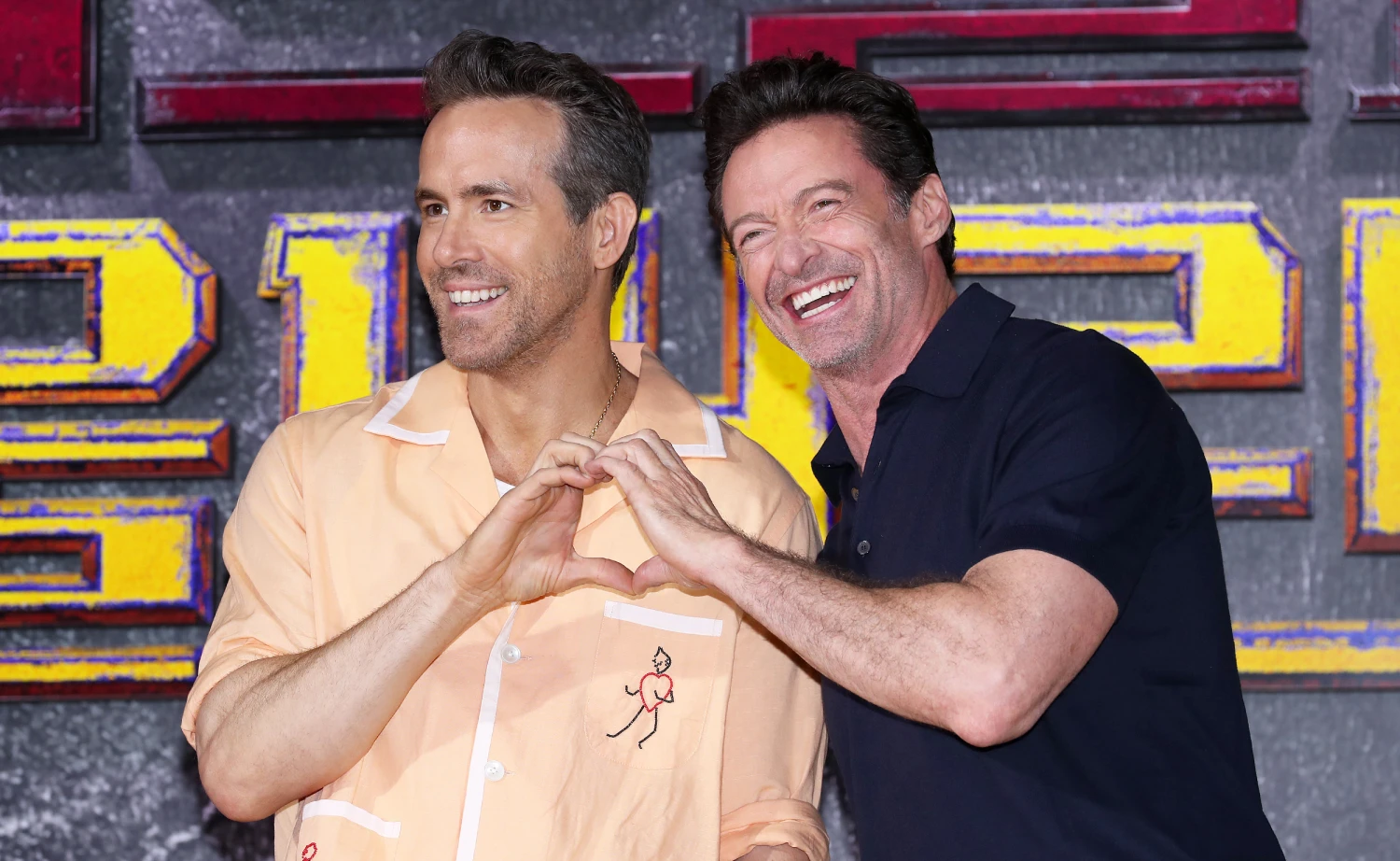
I was scrolling through Instagram at like 11pm (bad habit, I know) when I landed on a Deadpool & Wolverine clip for probably the hundredth time. Reynolds and Jackman doing their bickering-best-friends routine on screen, and it hit me — these two have been trolling each other online for almost a decade now. And every time they do, someone in the comments says the same thing: “Ryan’s definitely richer, look at Aviation Gin.” Someone else fires back with “Hugh’s been in the game longer, Wolverine paid him for 24 years.”
So I actually sat down and dug into it properly. Not just skimmed a headline number, but looked at where the money actually comes from for both guys. And honestly, the answer surprised me a bit — it’s not close, but not for the reason most people think.
The quick answer (because I know you’re skimming)
Ryan Reynolds sits at roughly $350 million. Hugh Jackman is generally pegged around $120 million, though a few outlets bump him closer to $150 million depending on how they’re counting recent deals.
So Reynolds is ahead, by a lot. But the “why” is way more interesting than the number itself, and it’s honestly a decent lesson in how actors actually build wealth these days.
Why I went down this rabbit hole in the first place
I run a little entertainment blog on the side (yeah, shameless plug energy, but it’s true), and net worth comparisons are consistently some of the highest-traffic articles I write. People are weirdly obsessed with knowing who’s “winning” between two famous friends. It’s the same energy as arguing about which sibling their parents like more.
But when I actually started researching Reynolds and Jackman side by side, I realized most of the “net worth” articles out there just throw a number at you and move on. Nobody explains the mechanics. So here’s my attempt at actually explaining it, based on digging through financial reporting, interviews, and deal coverage over the past few weeks.
Ryan Reynolds: the actor who accidentally became a businessman
Here’s the thing that trips people up about Reynolds — his acting salary is NOT where most of his money comes from. I made this mistake myself initially, assuming Deadpool paychecks were doing the heavy lifting.
They’re not. Not even close.
The real story is Aviation Gin. Reynolds bought into the brand back in 2018, did his usual weird, funny, hyper-online marketing thing with it (remember the “Peloton Wife” ad he made in 72 hours to hijack a viral controversy? that’s the playbook), and then sold it to Diageo in 2020 in a deal reportedly worth up to $610 million. He was believed to hold around a 20% stake.
Then he did it again with Mint Mobile. Bought in as an investor in 2019, helped market it with the same irreverent style, and when T-Mobile acquired Mint in 2023 in a deal valued around $1.35 billion, Reynolds — reportedly owning about 25% — walked away with a serious payday, estimated around $300 million by some reports.
And then there’s Wrexham. He and Rob McElhenney bought a struggling Welsh football club for basically pocket change in 2020, turned it into a docuseries and a genuine footballing success story, and the club’s valuation has climbed into the hundreds of millions since, with reports of a stake sale to Apollo Sports Capital pushing some net worth estimates as high as $413 million.
So when I actually laid it out, the pattern became obvious: Reynolds isn’t rich because he’s a movie star who also does gin ads. He’s rich because he treats his fame like marketing capital and keeps reinvesting it into equity stakes he can actually own and eventually sell. The acting is almost the distribution channel for his business instincts, not the other way around.
Hugh Jackman: the guy who did it the “traditional” way
Jackman’s story is basically the opposite, and honestly it made me respect him more once I understood it.
He played Wolverine for 24 years. Twenty-four. His first X-Men paycheck in 2000 was $500,000. By the time he got to X-Men Origins: Wolverine and The Wolverine, he was pulling in $20 million a film. That’s an insane trajectory, but it’s also just… a really long, really consistent acting career. No equity flips, no gin brands sold to conglomerates.
He’s added some business ventures along the way — Laughing Man Coffee being the big one, which he co-founded in 2011 and eventually sold to Keurig Dr Pepper, with proceeds going toward his foundation. But it’s nowhere near the scale of what Reynolds built with Aviation Gin or Mint Mobile.
Jackman’s wealth also took a hit relatively recently. He and his ex-wife Deborra-Lee Furness finalized their divorce in 2025 after 27 years of marriage, and reports put the split assets at somewhere around $387 million combined, with Jackman’s share obviously being less than the full figure once divided. That’s part of why some outlets have his current net worth landing anywhere between $100 million and $180 million depending on when the estimate was made and whether it accounts for the settlement.
Basically: Jackman got rich the old-fashioned Hollywood way — incredible longevity, top-tier paychecks, Broadway success (he’s got a Tony for The Boy from Oz), and smart-but-modest side ventures. Reynolds got rich the new way — using fame as leverage to build and flip actual companies.
Where I actually screwed up my first draft of this comparison
When I first started writing this, I assumed the gap was mostly about movie paychecks — like Reynolds must just get paid way more per film. That’s wrong. Jackman’s per-film rate has been right up there with Reynolds’ at various points; Jackman made $20 million for The Wolverine back in 2013, and Reynolds’ typical rate now is around $20 million minimum too, sometimes touching $30 million-plus with backend deals on something like Spirited.
The lesson for me was: don’t assume movie star net worth is about movie salaries. For most A-listers at this level, it’s about what they do with the money and fame outside the film itself. That’s the actual differentiator between these two guys.
If you’re trying to research celebrity net worth yourself, here’s what I’d actually do
Since I ended up doing a deep dive on this, here’s the process I’d recommend if you want to fact-check any celebrity net worth claim instead of just trusting the first headline you see:
- Start with Celebrity Net Worth, but treat it as a starting estimate, not gospel. They’re transparent about their methodology being based on public data and reasonable assumptions, not insider financial statements.
- Cross-reference with actual deal reporting. For Reynolds, that means looking up the Diageo-Aviation Gin sale terms and the T-Mobile-Mint Mobile acquisition value, since those are publicly reported business transactions with real dollar figures attached.
- Check for recent life events that would change the number — divorces, business sales, big new deals. Jackman’s divorce settlement is a perfect example of something that meaningfully shifts a net worth figure but doesn’t show up unless you’re looking for it.
- Be skeptical of round, suspiciously stable numbers that don’t move for years. Wealth from equity and business ownership fluctuates; if a site hasn’t updated a figure in three years, it’s probably just copy-pasted from somewhere else.
Common mistakes people make with this exact comparison
I saw a lot of these while researching, and honestly made a couple myself before double-checking:
- Assuming “more famous” means “richer.” Jackman arguably has more mainstream long-term recognition through Wolverine and Broadway, but fame and net worth aren’t the same axis.
- Ignoring the divorce/settlement factor when comparing current figures. A 2023 estimate and a 2026 estimate for Jackman can look wildly different for reasons that have nothing to do with his career.
- Treating “net worth” as liquid cash. Most of both these guys’ wealth is tied up in equity, real estate, and ongoing business value — not a pile of money sitting in a checking account.
- Forgetting inflation and deal structure. A “$610 million deal” doesn’t mean Reynolds personally banked $610 million; it means that’s the total deal value across an earnout period, split among multiple stakeholders.
Final thoughts
Honestly, after going through all this, I don’t think the interesting takeaway is “Reynolds wins.” It’s that there are genuinely two different playbooks for building wealth as a famous actor, and both of these guys picked one and committed hard.
Jackman bet on craft, longevity, and reputation — and it paid off in a slow, steady, very respectable way. Reynolds bet on using his cultural capital as a lever to build and flip actual companies, and it paid off in a much bigger, much faster way.
If you’re the type who likes rooting for the “hard work over decades” story, Jackman’s version feels more relatable. If you’re into the “spot an opportunity and go all in” story, Reynolds is the more interesting case study. Either way, next time that Deadpool & Wolverine bickering shows up on your feed, you’ll actually know what’s behind the joke.